Who Pays Closing Costs in Connecticut: Buyers or Sellers?

In Connecticut, both buyers and sellers share the responsibility for various closing costs in a real estate transaction. These costs are crucial for finalizing the deal and ensuring a smooth transfer of ownership. Closing costs may encompass fees for appraisals, inspections, title searches, and attorney services, among others. Generally, buyers bear costs directly related to securing their mortgage, such as loan origination and appraisal fees, while sellers typically cover real estate agent commissions and transfer taxes. Below is a detailed breakdown of who usually pays for what, followed by a comparison of two sample closing disclosures to illustrate how these costs are allocated in a real-world scenario.
Closing Costs for Buyers
As a buyer in Connecticut, you should budget for several closing costs to ensure you have enough cash on hand. Here are the common expenses buyers usually cover:
Lender Fees
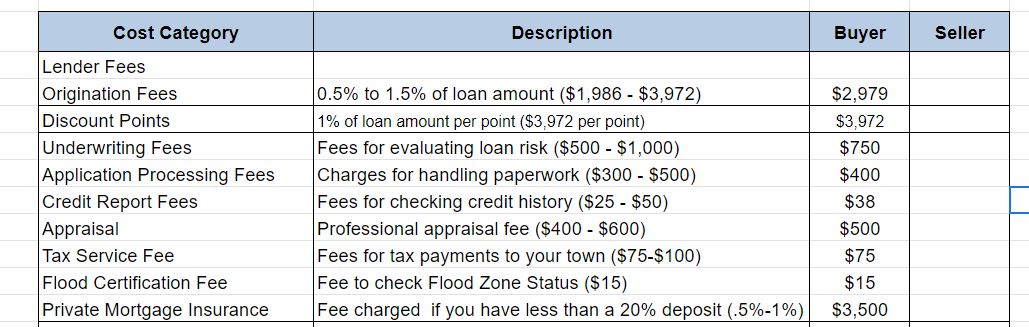
Origination:
This fee covers the costs associated with processing your mortgage application, such as underwriting, document preparation, and administrative overhead. In Connecticut, origination fees typically range from 0.5% to 1.5% of the loan amount.
Discount Points:
If you opt to buy down your mortgage rate, you may be charged points by the lender. Each point represents 1% of the loan amount and can lower your interest rate by about 0.25%. So if your home is worth $300,000 and you pay one point (or $3,000), you could potentially reduce your interest rate by 0.25%
Underwriting Fees:
Lenders may also charge a separate underwriting fee, which covers the cost of evaluating your creditworthiness and determining if you qualify for the loan. This fee can run between $500 to $1,000
Processing Fees:
These are charged by some lenders to cover the administrative costs associated with processing your loan application. They typically range from $300 to $800 so make sure you inquire about them beforehand.
Credit Report Fee:
Lenders typically pull credit reports to assess your risk as a borrower. This fee ranges from $25 to $50 per report.
Appraisal Fee: 
Before approving your mortgage, the lender will require a professional appraisal to ensure the property’s value is in line with the loan amount. This usually costs between $300 and $500 in Connecticut.
Tax Service Fee :
This covers the cost of ensuring that your property taxes are paid on time. The fee usually ranges from $75 to $100.
Flood Certification Fee:
If the home is located in a flood zone, the lender may require a certification as part of the closing process. This typically costs around $15.
Private Mortgage Insurance (PMI) :
If you’re putting less than 20% down on your home, lenders may require you to pay PMI. The cost is typically between 0.5% to 1% of the loan amount each
Prepaid Expenses/Escrow Items

Homeowners Insurance Premium:
Lenders also require homeowners insurance to protect their investment in the property. The cost of homeowners insurance can vary depending on the location and value of the home, but it typically ranges from $500 to $2,000 per year. The lender may require you to prepay a portion of this cost at closing.
Property Tax Escrow Expense:
Lenders often require prepayment of estimated property taxes to ensure they have sufficient funds to cover the taxes when due. Typically, the lender collects between 2 to 6 months of the total tax bill, depending on the proximity of the closing date to the tax due date. These funds are held in escrow by the bank.
Home Inspection Fee:

While not always required by lenders, a home inspection is highly recommended for buyers to identify any potential issues with the property. The cost of a home inspection can range from $300 to $500.
Title Fees

Title Search and Title Insurance:
These fees safeguard both the lender and the buyer from potential issues with the property’s title. Essentially, these services verify that the seller has the legal authority to sell the property and ensure that any title issues are resolved upon sale. The title search fee typically ranges from $75 to $100, while title insurance can cost between 0.5% and 1% of the loan amount.
Title Insurance Fee:
This protects the lender and buyer from any issues with the property’s title that were not discovered from the title search, such as liens or ownership disputes. The cost of title insurance can vary depending on the loan amount and location, but it typically ranges from 0.5% to 1% of the loan amount.
Closing Attorney’s Fees:
This covers the cost of hiring an attorney or escrow company to oversee the closing process. It typically ranges from $750 to $1,500
Recording Fees:
These fees cover the cost of recording the deed and other necessary documents with the county or town clerk’s office. The fee is usually based on the number of pages being recorded.
Closing Costs for Sellers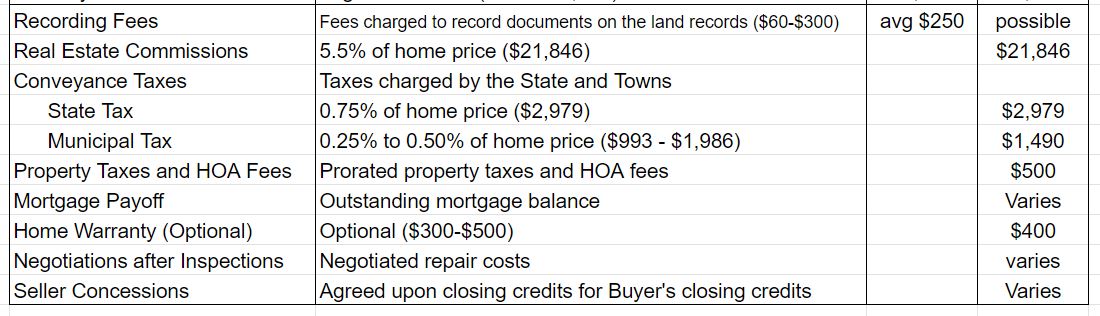
As a seller in Connecticut, you also have several expenses to consider when closing the sale of your property. These costs can vary depending on factors such as the sales price, any outstanding debts or liens on the property, like your mortgage(s) or home equity lines, judgment liens, and the specifics of your agreement with the buyer. Here are some common closing costs for sellers in Connecticut:
Real Estate Agent Commission:
This is typically the largest expense for sellers, as it covers the commission for both the seller’s and buyer’s agents. These agents work hard to facilitate the transaction, negotiate terms, and ensure a smooth closing process. In Connecticut, the average commission rate is 5-6% of the sales price, which reflects the standard compensation for the valuable services provided by real estate professionals in the area.
Transfer Taxes:
In Connecticut, sellers are responsible for paying both state and local transfer taxes. The state transfer tax is $0.75 per $100 of the sale price, while local transfer taxes vary by town but are typically .25% for smaller towns and .75% for larger cities.
Attorney Fees:
In Connecticut, although sellers are not legally required to have an attorney present at closing, it is highly advisable. The seller’s attorney plays a crucial role, providing all necessary documentation for the closing process. This includes the deed for property transfer, conveyance tax forms, owner’s affidavits (which can waive the requirement for a survey), smoke detector affidavits (mandated by Connecticut law), and various IRS tax documents. The cost of hiring an attorney can range from $750 to $1,500.
Prorated Property Taxes and Homeowner Association Fees:
Property taxes in Connecticut are paid semi-annually, so sellers must reimburse the buyer for any property taxes that are unpaid and are due before the closing date. This amount can vary depending on when the property is sold and how much has already been paid.
If the property is in a common interest community, or is a condominium there are usually HOA fees due, these are also prorated.
Mortgage Payoff: 
Sellers in Connecticut are responsible for paying off any remaining mortgage balance on the property before closing. This includes the outstanding principal, interest, and any prepayment penalties. Sellers should contact their lender to obtain a payoff amount, which will be deducted from the proceeds of the sale at closing. There may also be home equity lines or second mortgages that need to be repaid.
Home Warranty:
Sellers may choose to purchase a home warranty as an incentive for buyers. These warranties cover repairs or replacements for certain appliances and systems in the home, and typically cost around $300-$500.
Seller Concessions:
In some cases, sellers may agree to pay for certain closing costs or provide a credit towards the buyer’s closing costs. This can be negotiated during the sale process and should be included in the purchase agreement.
 Negotiations after Inspections:
Once a buyer has completed their home inspection, they may request repairs or credits based on any issues found. Sellers can choose to negotiate with the buyer and either agree to make the requested repairs, provide a credit towards closing costs, or decline the request altogether.
Miscellaneous Expenses:
Sellers may also be responsible for miscellaneous expenses, such as outstanding utility fees for electricity, gas, water, and other services.
Conclusion:
In conclusion, the process of buying and selling a home involves a multitude of costs for both buyers and sellers. Buyers must account for expenses such as down payments, closing costs, inspection fees, and potentially home warranty costs. On the other hand, sellers need to be prepared for real estate agent commissions, repairs, seller concessions, and other miscellaneous expenses.
Both parties must approach the transaction with a clear understanding of these financial obligations to ensure a smooth and successful deal. Careful planning, budgeting, and communication with real estate professionals can help both buyers and sellers navigate the complexities of a home sale and achieve their respective goals.